

Open six days a week - book a consultation with a specialist now - No Hidden Charges, No Pressure, Affordable
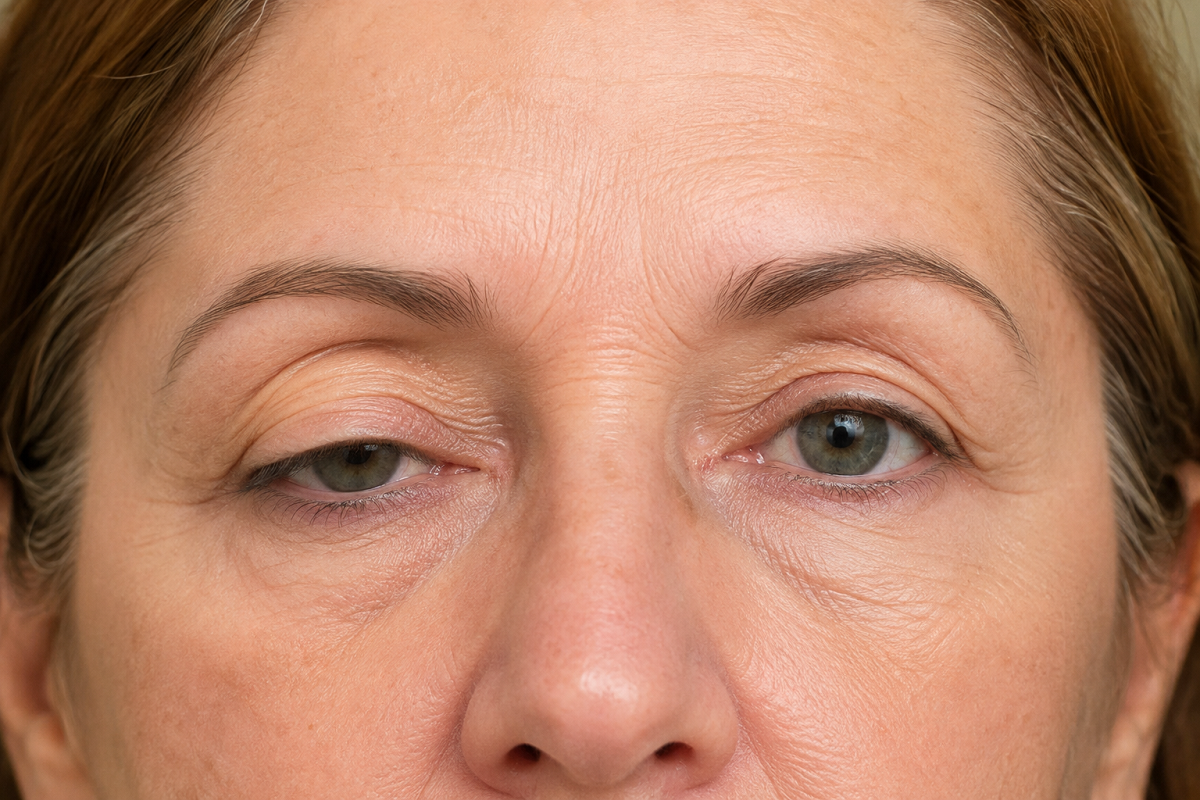
Non surgical blepharoplasty is chosen for one reason above all others: the downtime. Recovery is real, but it is measured in days, not weeks.
Looking fresher without traditional surgery appeals to a lot of people. The question we hear most is simple: what is recovery actually like after non surgical blepharoplasty? The reassuring part is that most patients choose this treatment precisely because it is built around minimal downtime, letting you return to your routine sooner than you might expect. Understanding the recovery process still matters, so you can set realistic expectations and get the best experience from it.
It is a cosmetic treatment designed to improve the appearance of the eyelid area without traditional eyelid surgery. Depending on your personalised treatment plan, advanced techniques may address loose skin, puffiness or dark circles. At Optimal Vision, every treatment starts with a consultation to assess your individual needs and recommend the most suitable approach.
Compared with surgical procedures, non surgical options are usually chosen because they involve less downtime, a shorter recovery, and a quicker return to normal activities.
Traditional eyelid surgery usually needs a longer healing process, while non surgical treatments are built to minimise disruption to everyday life. Everyone heals differently, but most people notice improvements without the extended recovery that surgery involves. It is still worth remembering that every treatment affects the body differently, so personalised aftercare guidance always matters.
The treated area begins settling naturally straight away. The exact experience depends on the treatment chosen and how you personally heal. During your consultation, our specialist team explains what to expect so you feel fully informed beforehand. Many patients appreciate how quick the treatment itself is, letting them head home shortly afterwards.
follow all aftercare instructions from your clinician
avoid touching or rubbing the treated area unnecessarily
keep follow-up appointments if advised
let the skin recover naturally
Everyone recovers at their own pace, so comparing your experience to someone else's is rarely useful.
follow professional guidance carefully
keep the treated area clean
avoid unnecessary pressure around the eyes
use only products your clinician recommends
One of the advantages of non surgical blepharoplasty is that many patients resume their normal routine relatively quickly compared with traditional surgery. Recovery is always individual, though. Some people feel comfortable returning to work sooner than others, while some prefer allowing extra time before social events. Listening to professional advice is always the safest approach.
One appealing aspect of non surgical blepharoplasty is that many patients notice visible improvements shortly after treatment, with results continuing to develop over the following days. The final appearance depends on the treatment method, your personal healing response, skin condition and the goals discussed at consultation.
assess how the treated area is healing
answer any questions you have
review treatment results
recommend any future care if appropriate
Every face is unique, so every treatment plan and recovery process should be too. At your consultation, our team evaluates your concerns and builds a plan tailored to you, including recovery guidance. Rather than relying on general advice online, always follow the recommendations given specifically for your treatment.
Recovery is shaped not only by the treatment but by careful planning beforehand. An experienced provider gives you a detailed consultation, a personalised plan, clear expectations about recovery, and professional aftercare guidance throughout.
follow professional instructions carefully
attend recommended follow-up appointments
give the treated area time to settle naturally
keep expectations realistic about the healing process
Recovery from non surgical blepharoplasty is generally shorter than traditional eyelid surgery, but good aftercare remains part of getting the best possible result.
A comprehensive consultation is the best way to find out whether this is right for you. Optimal Vision's consultant-led team, headed by Dr Amir Mani, has carried out more than 35,000 ophthalmic procedures between them, and every recommendation starts with a detailed assessment of your own eyes rather than a standard script.
You can be seen at either of our two London clinics, 7 Gower Street WC1E 6HA or Harley Street, Marylebone, both CQC-registered. Call 020 7183 3725 or email info@optimalvision.co.uk to book a consultation, or ask about our fixed, transparent pricing and 0% finance options.
It varies between individuals and depends on the treatment provided. Most patients choose it precisely because it involves less downtime than traditional eyelid surgery.
Many patients resume their normal routine relatively quickly. Your clinician will give personalised advice based on the treatment and your recovery.
Many patients notice improvements shortly after treatment, with results continuing to develop over the following days as the area settles.
It lets your clinician assess your concerns, discuss expectations and build a plan suited to your individual needs.
Follow personalised aftercare advice, attend follow-up appointments, and let the treated area recover naturally.
CAIRS uses donor corneal tissue, not a synthetic implant, to reshape the cornea in keratoconus. That single difference is what sets it apart from older ring-s...
31 Aug 2026
Non surgical blepharoplasty is chosen for one reason above all others: the downtime. Recovery is real, but it is measured in days, not weeks. Looking fresh...
27 Aug 2026
For the right candidate, ICL surgery remains one of the strongest vision-correction options in 2026. The question is not the calendar year. It is whether yo...
24 Aug 2026
Experience in laser eye surgery is not measured by the equipment in the room. It is measured by how carefully a surgeon reads your particular eyes before re...
21 Aug 2026
Corneal collagen cross linking is not about your prescription. It is about stopping the shape of the cornea from changing any further. You tend to take you...
17 Aug 2026
Most patients keep their results from droopy eyelid surgery for years, and some for life. What eventually changes is not the surgery failing. It is ordinary a...
14 Aug 2026
Femtosecond Laser Cataract Surgery replaces the traditional blade with a laser precise enough to complete the most delicate stages of cataract surgery. For many...
10 Aug 2026
Yes, contact lenses for astigmatism can be comfortable all day. The catch is that comfort depends far more on the fitting and your daily habits than on the le...
07 Aug 2026
Most chalazion removals take fifteen to twenty minutes. The bigger time commitment is the consultation and aftercare either side of it, not the procedure itself...
03 Aug 2026
Even a premium lens like Acuvue Oasys for Astigmatism only performs as well as the daily habits behind it. Comfort is built, not just fitted. Keeping your...
31 Jul 2026
Eye surgery for long sightedness is designed to last, but 'permanent' is a word worth unpacking. It corrects today's prescription. It cannot pau...
27 Jul 2026
Anyone who wears glasses can ask about a laser operation for eyes. Not everyone is suitable for one, and the only way to know which category you fall into is...
24 Jul 2026
Modern eye surgery for astigmatism can offer real benefits, but only for people who meet the clinical criteria. The assessment always comes before the promise...
20 Jul 2026
There is no single laser procedure that suits every patient. A Laser Eye Surgeon in Birmingham reaching out to Optimal Vision will tell you the same thing our...
17 Jul 2026Keratoconus rarely announces itself. It shows up as vision that keeps needing a stronger prescription, which is exactly why early diagnosis makes such a differe...
10 Jul 2026
Isn’t it frustrating when you can’t see the world clearly? Whether it’s your vision becoming hazy or experiencing discomfort, seeking the ex...
18 Jun 2026
When it comes to dry eye treatment, many of us often seek options that deliver long-lasting relief. LipiFlow Dry Eye Treatment has emerged as a leading soluti...
15 Jun 2026
Imagine waking up one day to a world where you can see clearly, without the restrictions of glasses or contacts. At Optimal Vision, we understand that maintai...
12 Jun 2026
At Optimal Vision, we believe that proactive eye care is essential for preserving your sight and improving your quality of life. If you’re wondering whe...
09 Jun 2026
Cataract surgery is often shrouded in misconceptions that can lead to unnecessary anxiety or reluctance to seek treatment. As leading specialists at Optimal V...
05 Jun 2026
Are you tired of looking in the mirror and seeing tired, puffy eyes? If so, you’re not alone. Many of us find ourselves grappling with under-eye bags, s...
02 Jun 2026
Imagine waking up every day with clearer vision, free from the limitations of progressive corneal conditions. At Optimal Vision Eye Clinic in London, we&rsquo...
30 May 2026
Is your vision often blurred, accompanied by a persistent feeling of dryness? You’re not alone. Chronic dry eyes affect countless individuals, significa...
22 May 2026
Are you tired of relying on glasses or contact lenses? The thought of lens replacement surgery might have crossed your mind. However, we often encounter a myr...
15 May 2026
Are droopy eyelids impacting your daily life? You’re not alone. As we embrace the new year, more Londoners are opting for droopy eyelid surgery to r...
11 May 2026
Are you tired of constantly reaching for your reading glasses? For many of us, the onset of presbyopia can be a frustrating reality as we age. Fortunately, at...
08 May 2026
In a world where technology continues to reshape healthcare, cataract surgery has experienced a significant transformation. At Optimal Vision, we understand t...
01 May 2026
Are you tired of dealing with blurred vision and wondering about the fastest route to regain your clear eyesight? If you're considering cataract surgery i...
13 Apr 2026
When was the last time you looked in the mirror and thought, "Wow, my vision seems a bit off"? Whether it’s a slight blur that you’ve be...
09 Apr 2026
Are you tired of fumbling with glasses or dealing with the discomfort of contact lenses? If you’re considering laser eye surgery, you’re not alone...
06 Apr 2026
Are you tired of looking perpetually tired or older than your years? Droopy eyelids can dramatically affect our appearance and even our self-esteem. At Optima...
30 Mar 2026
When was the last time you thought about your vision? With the constant demands of our day-to-day lives, it's easy to overlook our eye health. A private e...
23 Mar 2026
Keratoconus is a condition that can drastically alter your vision, leading to discomfort and a significant impact on your daily life. If you're noticing c...
18 Mar 2026
At Optimal Vision, we understand how crucial it is for our patients to maintain healthy vision. One of the transformative treatments we offer is Corneal Colla...
11 Mar 2026
As we age, many of us face the challenge of presbyopia, a common vision condition that affects our ability to focus on close objects. If you've found your...
04 Mar 2026
Droopy eyelids, or ptosis, can significantly impact your appearance and quality of life. If you're based in London and experiencing any of the symptoms as...
28 Feb 2026
When considering lens replacement surgery in Birmingham, preparing adequately is essential to ensure a smooth process and optimal recovery. At Optimal Vision,...
24 Feb 2026
At Optimal Vision, we understand that contemplating eye surgery can be daunting, especially when it comes to recovery time. If you are considering Femtosecond...
19 Feb 2026
Are you tired of dealing with dry, itchy, or irritated eyes? If so, you're not alone. Many people experience discomfort due to dry eye syndrome, which...
16 Feb 2026
Keratoconus is an eye condition that gradually affects the shape of the cornea, leading to vision distortion. For many, the signs can be subtle at first, making...
10 Feb 2026
If you're considering improving your vision through ICL (Implantable Collamer Lens) surgery in London, you’re not alone. This innovative procedure is...
06 Feb 2026
At Optimal Vision, we understand that an eyelid cyst, while often benign, can lead to discomfort and aesthetic concerns. If you’re in Birmingham and suspe...
03 Feb 2026
If you’re one of the many Londoners grappling with astigmatism, you know how it can impact your quality of life. Thankfully, advancements in modern medici...
30 Jan 2026
Dry eyes and blepharitis are common conditions that can significantly affect your quality of life. At Optimal Vision in London, we understand how uncomfortable...
26 Jan 2026
When it comes to eye health, understanding the latest treatments available is crucial. One such innovative procedure is CAIRS, or Corneal Advanced Imaging and...
23 Jan 2026
Are you tired of relying on glasses or contact lenses? Dreaming of waking up to clear vision? LASIK eye surgery could be the solution you’ve been searchin...
20 Jan 2026
Are you tired of struggling with glasses or contact lenses? Seeking a long-lasting solution to your vision problems? At Optimal Vision, we understand how crucia...
17 Jan 2026
When it comes to maintaining our youthful appearance, the eyes often tell the story. Unfortunately, droopy eyelids can make us appear tired or older than we are...
14 Jan 2026
Imagine waking up one day and experiencing the world with crisp clarity. For many, this is possible through laser cataract surgery in London, a modern procedure...
09 Jan 2026
Seeing the world in clear detail is something we all cherish, but for many, long sightedness can blur that vision. At Optimal Vision, we understand the struggle...
05 Jan 2026
When it comes to vision correction, many people turn to laser eye surgery as a viable option. With advancements in medical technology, procedures like LASIK, LA...
02 Jan 2026
Keratoconus is a progressive eye condition that affects the cornea, leading to distorted vision. If you're searching for Keratoconus Treatment in London, yo...
29 Dec 2025
When it comes to laser eye surgery, many potential patients often wonder, "Is laser eye surgery painful?" If you’re considering LASIK or LASEK s...
24 Dec 2025
Cataracts can significantly impact your daily life, causing blurry vision, difficulty with night driving, and problems with glare. If you're in London and e...
22 Dec 2025
When it comes to correcting vision impairments, laser eye surgery has emerged as a revolutionary solution. For individuals with high prescriptions, the question...
19 Dec 2025
When considering the life-changing benefits of laser eye surgery, one of the first questions that often arises is: how much is eye laser surgery? At Optimal Vis...
17 Dec 2025
Laser eye surgery can transform your day-to-day life in as little as 15 minutes, freeing you from glasses or contact lenses. But the big question for most peopl...
08 Oct 2025
Thinking about life without glasses or contact lenses? You’ve likely come across different types of laser eye surgery — the most common being LASIK,...
02 Oct 2025
A Comprehensive Guide LASIK surgery is a life-changing procedure that can free you from the constraints of glasses and contact lenses. At Optimal Vision, we...
13 May 2025
If you wear glasses or contact lenses, you’re all too familiar with the morning struggle. Your alarm rings, and before you can even begin your day, you&rs...
19 Mar 2025
Laser eye surgery has become a popular and effective solution for vision correction, helping millions of people worldwide to reduce or eliminate their dependenc...
25 Aug 2024
Laser eye surgery treatment will change the curvature of front part of the eye called cornea which help the vision to improve similar to contact lens correction...
27 Apr 2021
Everybody likes a bargain, whether that is in the January sales or a getaway at half the price. Saving money is a good feeling. Over the past few years there ha...
16 Mar 2021
Dealing with glasses or contact lenses have daily challenges with its inconvenience, like losing your glasses , heavy feeling over your nose missing them or eve...
17 Jan 2021
Laser eye surgery is a common vision correction, and although many people have undergone this surgery, there are several misconceptions and myths about this pro...
15 Jan 2021
The natural ageing process affects several areas of our lives. It may affect your near vision, making it difficult for you to focus on words while reading. It c...
06 Dec 2020
There are more options than you can count for your laser surgery in London. But when laser eye surgery is concerned it is important to think carefully about you...
19 Mar 2020
A recent study reveals that more than one billion people worldwide need eyeglasses, many of whom do not have access to vision correction. Furthermore, three out...
19 Feb 2020
Lens replacement surgery is a ground-breaking technology. The treatment not only corrects a large range of visual errors but also corrects the problem of catara...
05 Feb 2020
How safe is laser eye surgery? This is one of the most commonly asked questions that come from patients who are about to undergo the surgery. Laser eye surge...
29 Jan 2020
Laser eye surgery proves effective in fixing your vision problems among millions of people around the globe. A large number of these patients have achieved 20/2...
29 Dec 2019
Dr Mani has performed more than 35,000 ophthalmic procedures, including LASIK, LASEK, PRK, Femto Cataract, RLE, Lens ICL and Phakic IOL Surgery

 I had a great experience performing my laser eye surgery at Optimal Vision Clinic. All the staffs are very helpful, co-operative and supportive throughout the treatment process. On the first call,
they explained the entire procedure in details and gave necessary instructions at every stage. My eye surgeon made me feel comfortable and relaxed before and during
the procedure. Aftercare was done properly with a thorough check-up of my eyes. I would like to recommend this clinic to everyone!
I had a great experience performing my laser eye surgery at Optimal Vision Clinic. All the staffs are very helpful, co-operative and supportive throughout the treatment process. On the first call,
they explained the entire procedure in details and gave necessary instructions at every stage. My eye surgeon made me feel comfortable and relaxed before and during
the procedure. Aftercare was done properly with a thorough check-up of my eyes. I would like to recommend this clinic to everyone!

Very happy and impressed with the highly professional care and service I’ve received at the Optimal Vision clinic. Dr Mani is
so professional, and he explained everything about Laser surgery and answered all my questions. The surgery was quick and almost completely painless. My eyes have healed
perfectly and quickly. I would highly recommend this clinic.
My husband had been experiencing discomfort in his left eye since July and was seen by various doctors/consultants even at the Queen Mary’s hospital but no abnormalities were found.
This week Dr. Mani discovered the fault which happened to be Retina detachment with three tears.
Dr. Mani’s preciseness and his perfectionist attitude to attention to details,
detected the source of the main issue and saved my husband’s eye. We feel utterly grateful and can not recommend him enough for his excellence.


We are recognised by most UK and international medical insurance providers.
Please call us to ask about private healthcare insurance.




 020 7183 3725